
Beyond
the Object
Designing for connection, continuity, and meaning in contemporary jewelry ecosystems.
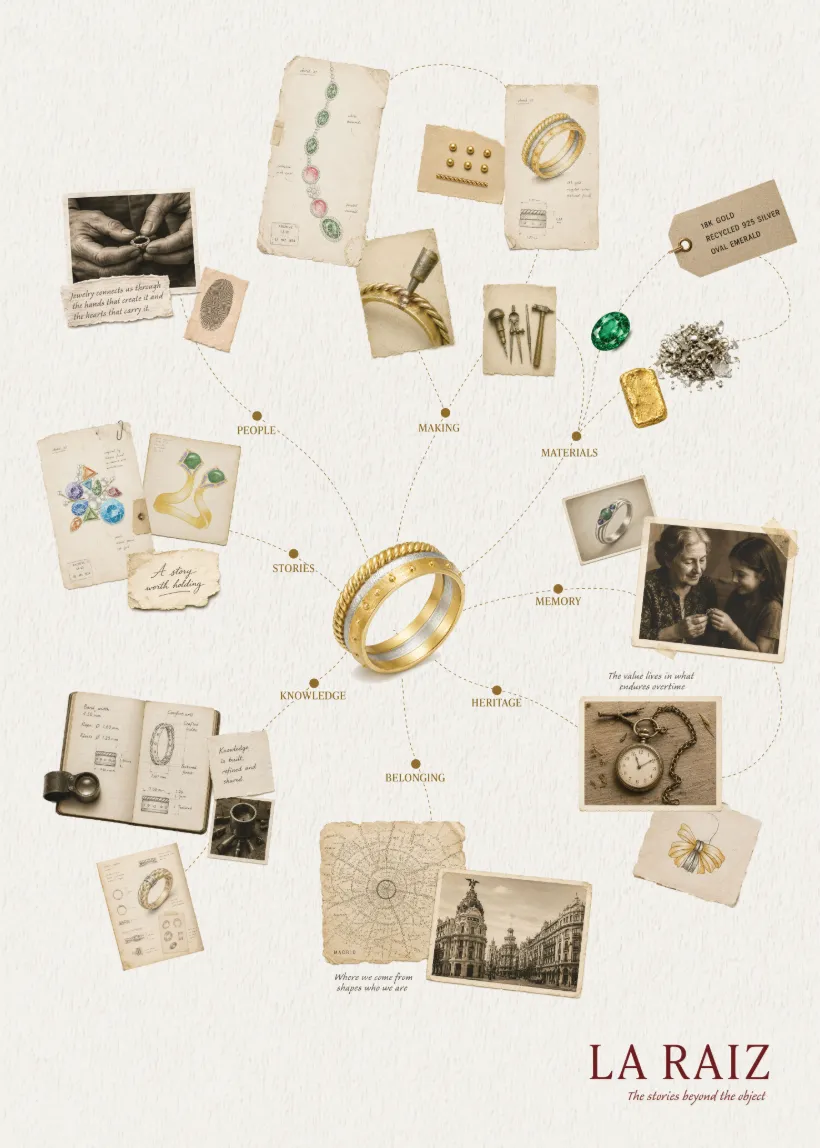
A favorite piece of jewelry may be inherited, received on a special occasion, or given by someone we love. Have you ever thought about the person who made it, or the story that piece carries?
Meaning does not begin when an object enters the life of its wearer. It begins with the designer — and keeps accumulating as new people, memories, and experiences join its journey.
Contemporary independent designers create objects rich in cultural and emotional value. Yet the systems through which those objects are discovered, sold, and remembered rarely keep the designer present in the story.
How might we help contemporary jewelry designers stay part of the story a piece carries, beyond the moment of sale?
A chain of meaning — and a gap inside it
The research followed a piece of jewelry from the bench to the wearer through interviews with designers, consumers, and industry professionals, in-store observations, and social listening across Madrid. The distinction between a meaningful piece and an interchangeable one had little to do with how it was made — and everything to do with who gave it, when, and what it meant.
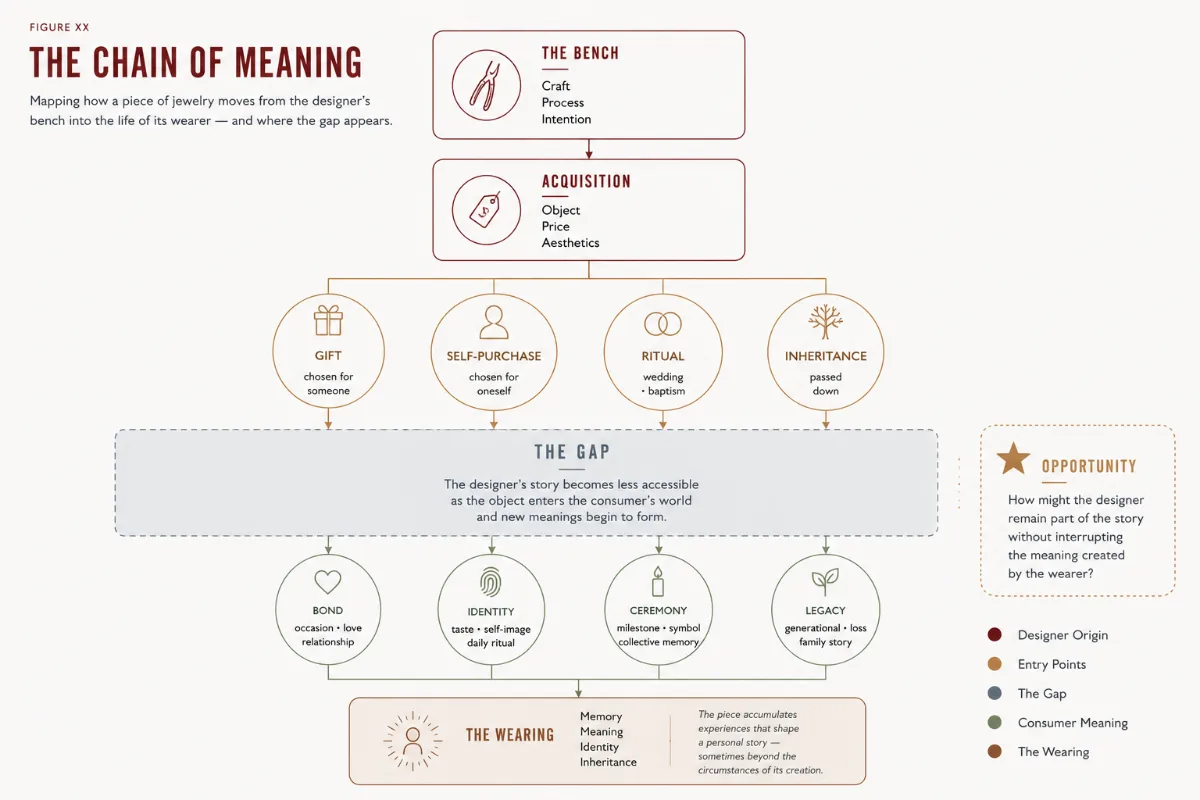
Invisibility is not a failure
The designer's disappearance from the object's story is a natural characteristic of jewelry itself — not something broken to be fixed.
Proximity has no system
Value is activated by closeness to the maker — at gifting, memory-making, celebration, inheritance. Yet no infrastructure keeps designers near those moments.
Content, but no infrastructure
Designers hold the cultural content that gives work meaning. What they lack are the systems to carry that content beyond the point of sale.
Connection · Origin · Continuity
A designer-led collective and physical platform — part living archive, part community space, part distributed network. La Raíz is built on a simple belief: that the challenge designers face is not one of creativity or relevance, but of infrastructure.
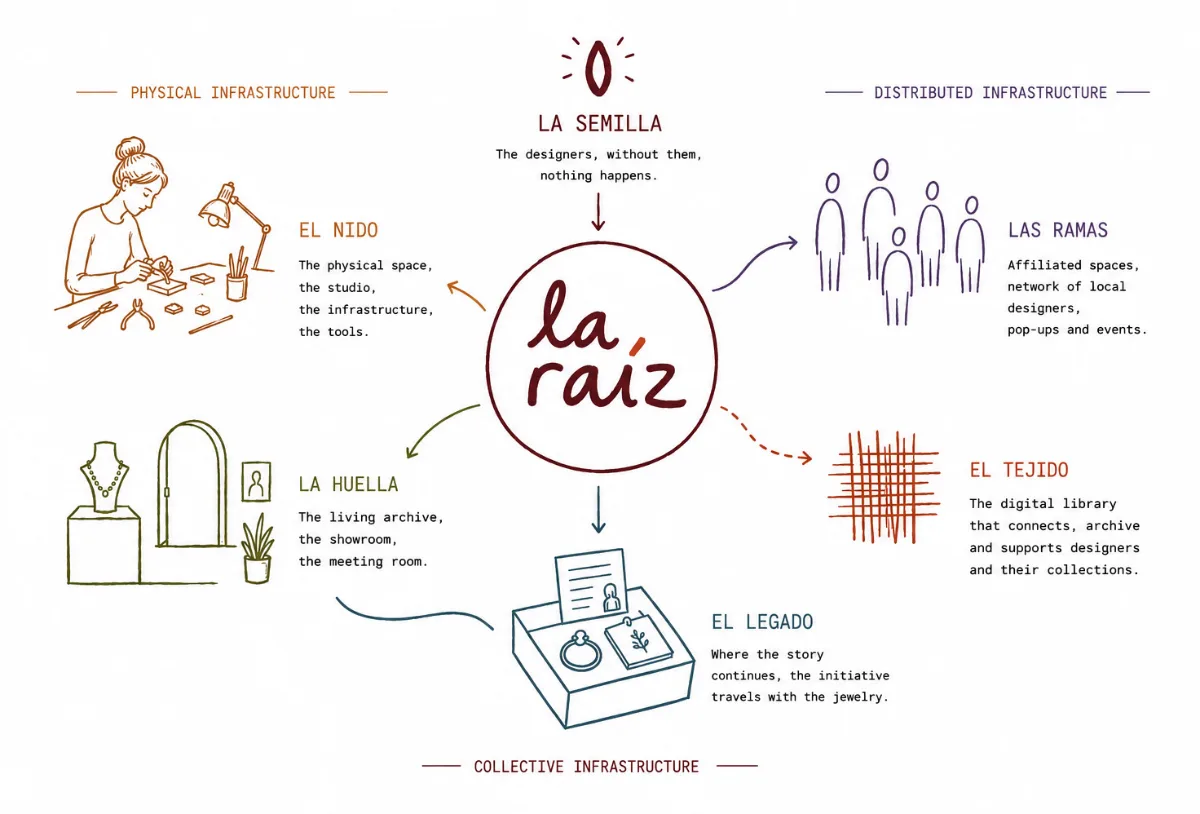
La Semilla
The beginning of everything. Each designer brings knowledge, practice, and perspective. Here is where value originates.
El Nido
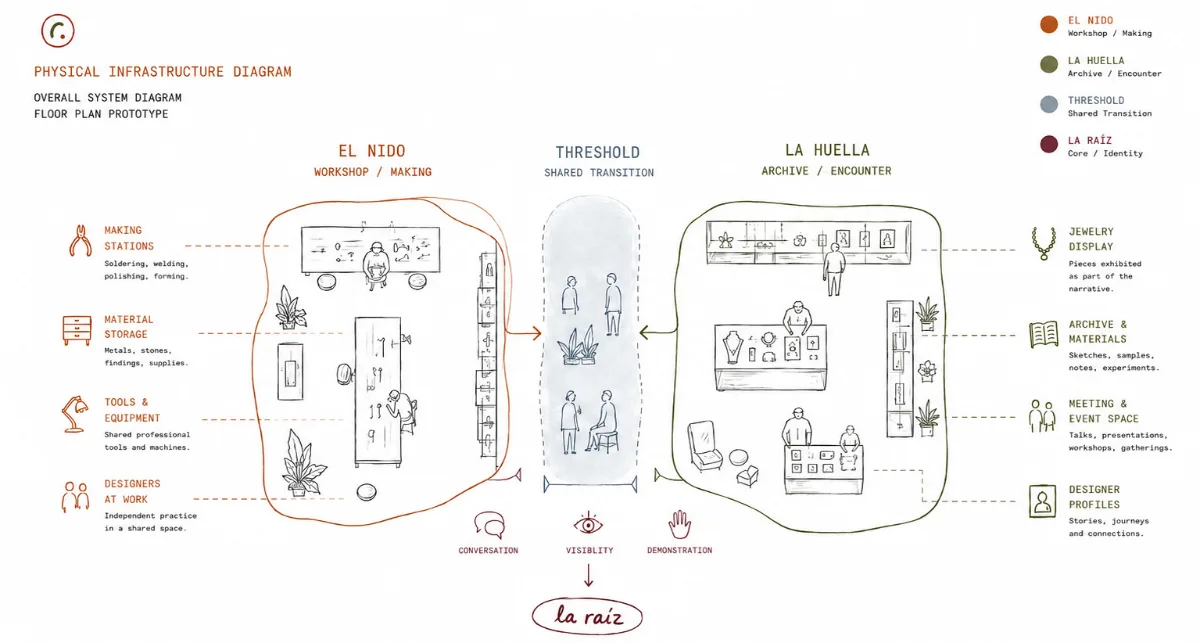
A shared workshop with the tools, equipment, and light that are hard to maintain alone. Colleagues without employees.
La Huella
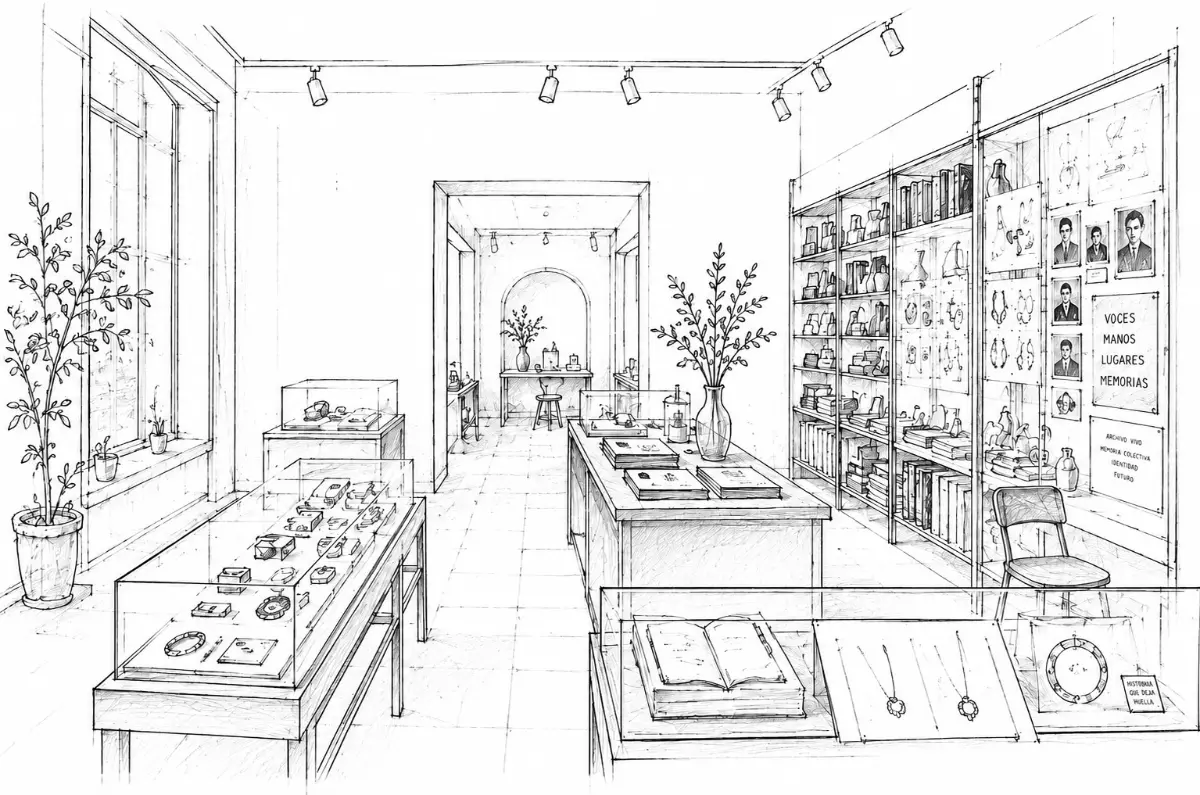
A public archive and encounter space — not a store. Visitors meet the people, processes, and stories behind the work.
El Tejido
A shared network and knowledge library. Where expertise, resources, and collaboration circulate intentionally.
Las Ramas
Partnerships, affiliated locations, pop-ups, and events that extend the ecosystem into the wider city.
El Legado
Provenance, process, and context that travel with a piece — so the maker's voice stays accessible through its life.
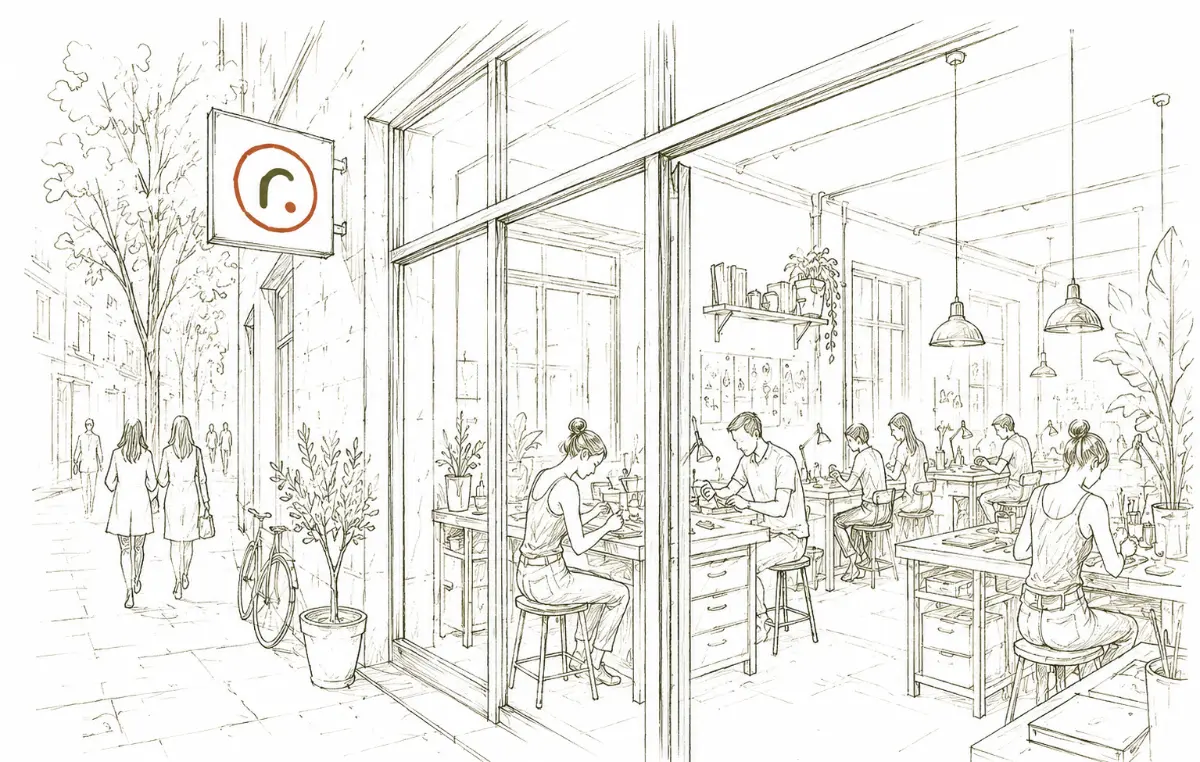
Making and meaning, under one roof
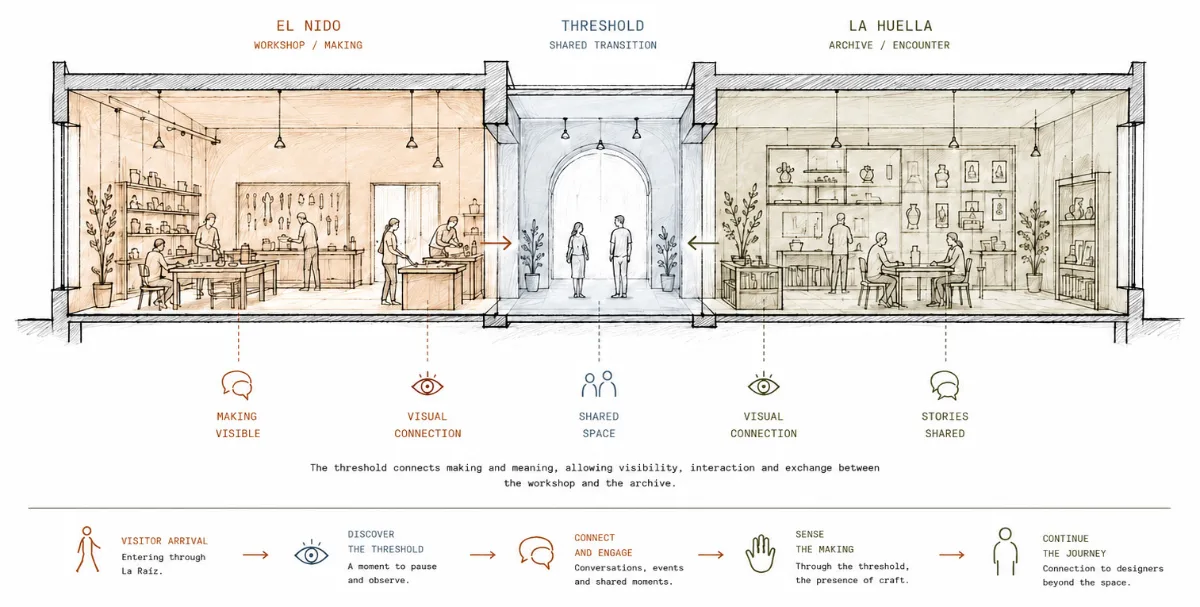
Between El Nido, the workshop, and La Huella, the archive, sits a shared threshold — a space where creating and encounter overlap. Not fully public, not fully private: the place where the presence of making becomes visible.
The story travels with the piece
The principle La Raíz is developing most actively at this stage of the project.
El Legado is a guiding principle, not a product. It invites designers to let provenance, process, and context accompany their work in ways authentic to each practice — so the maker's voice stays accessible long after a piece leaves their hands. It reflects the belief that jewelry keeps accumulating meaning across its life.
Where a piece began — its materials and their origins.
Sketches, experiments, and the making behind the form.
Recordings and notes in the designer's own words.
The personal story a maker chooses to share.
It does not preserve authorship or fix meaning. It keeps the designer present as a piece gathers new memories — the stories that continue beyond the object.
Four angles, one ecosystem
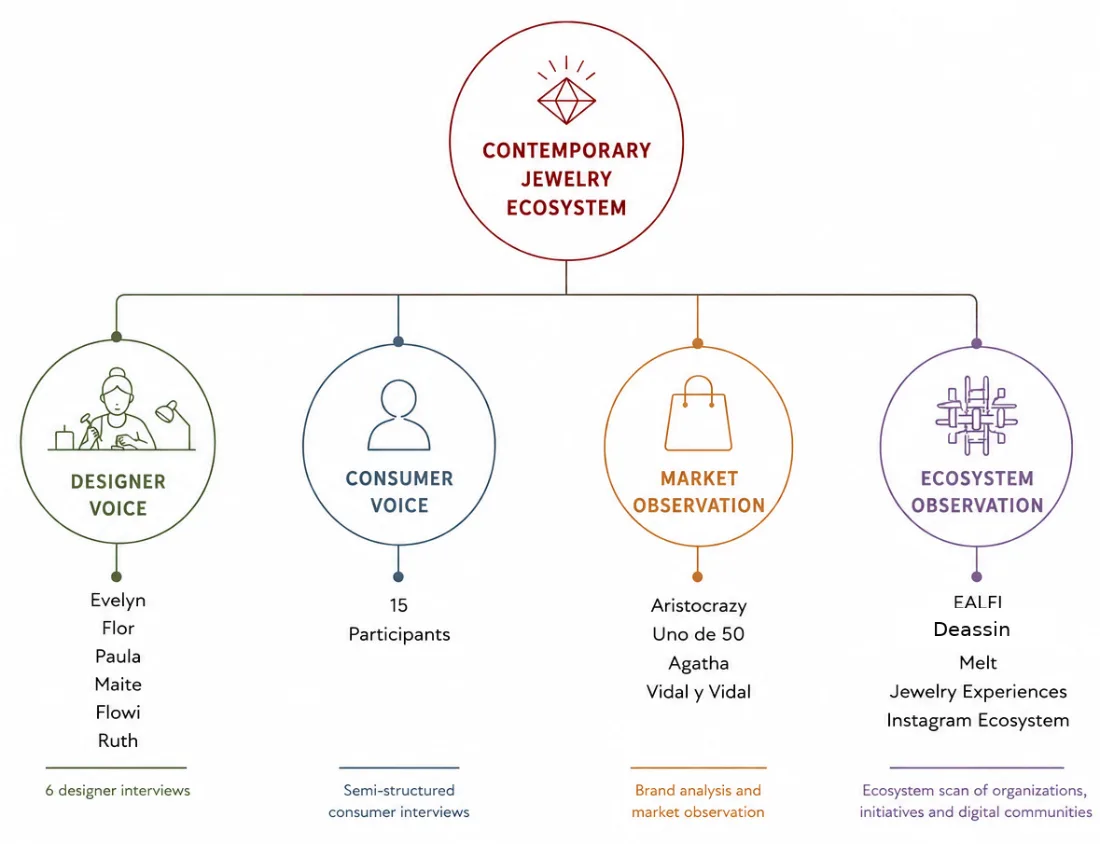
Rather than designing a single object, the study mapped the wider network of relationships, systems, and touchpoints that shape how value is created, communicated, and sustained — through the designer's voice, the consumer's voice, market observation, and an ecosystem scan.
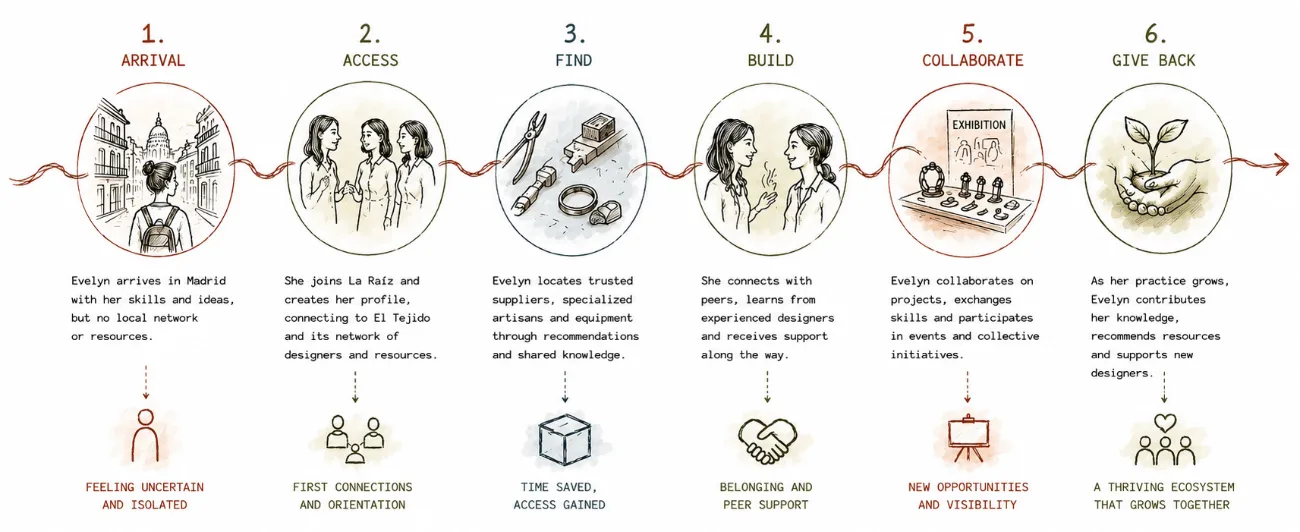
For designers
Three things the research kept returning to: time to make, community without competition, and visibility without becoming a content creator — all without losing their agency.
For consumers
A chance to encounter jewelry beyond retail — the stories, processes, materials, and people behind a piece, before any purchase takes place.
For the ecosystem
The practices of a thriving community already exist. What's missing is the infrastructure that connects them — so cultural value can keep evolving.

“Jewelry is architecture at the scale of the body; architecture is jewelry at the scale of the community.”
This thesis was written by Ana Rebeca Chu N. for the Master in Creativity and Design Leadership, exploring the intersection of architecture and jewelry — two disciplines bound by care, detail, and the meaning objects carry through people's lives.